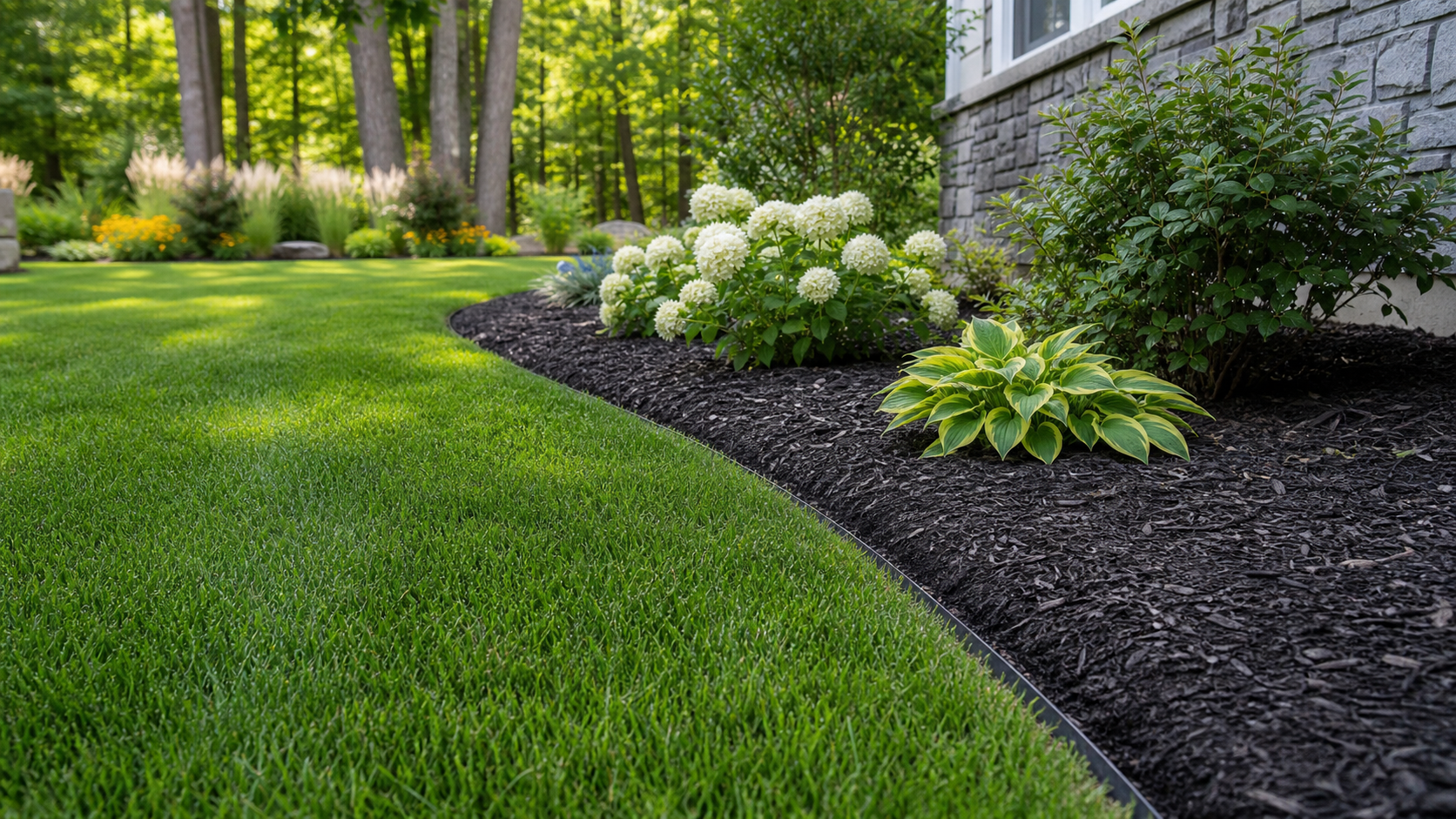
The right garden-bed edge gives a landscape a finished baseline. It keeps mulch where it belongs, protects plants during mowing, and makes the whole property easier to maintain.
Why edging matters
A defined transition between lawn and bed prevents mulch from washing into the turf and helps stop grass roots from creeping underneath. It also gives mowing and trimming crews a clear line to follow.
When a hand-cut spade edge is the right choice
A natural spade edge is a clean, cost-conscious option for Central Connecticut properties. A vertical turf-side cut with a shallow angled basin creates a crisp shadow line and gives mulch a place to settle. Plan to refresh it during spring cleanup, with a light touch-up when needed.
When to choose Belgium block
Granite Belgium block creates a permanent, formal border that handles New England freeze-thaw cycles well. It costs more up front and needs a stable gravel or stone-dust base, but it can reduce recurring edge-refresh work for decades.
Does metal edging hold up through Connecticut winters?
Commercial-grade aluminum or steel provides a thin, nearly invisible profile and a reliable root barrier. Deep stakes help the edge stay in place as soil freezes and expands. Avoid thin plastic rolls, which can lift, crack, or catch mower blades.
Plan for depth and drainage
A professional edge is commonly cut about four to five inches deep, depending on the material and turf conditions. On sloped properties, keep water flow in mind so a solid border does not create an unintended dam.